UV Curing FAQs
What is UV curing?
UV curing is a manufacturing process that uses ultraviolet light to quickly cure adhesives, inks, coatings, and resins. When exposed to the correct UV energy, these materials harden in seconds rather than minutes or hours, allowing parts to move through production faster and more consistently.
What is UV curing? (plain-English version)
UV curing is a way to make certain glues, inks, and coatings harden almost instantly using ultraviolet light. Instead of waiting for something to air-dry or heat up, you shine UV light on it and it’s cured in seconds.
What materials can be UV cured?
UV curing works with specially formulated adhesives, inks, coatings, and resins that are designed to react to ultraviolet light. When exposed to the correct UV energy, these materials harden almost instantly. Not all materials are UV curable. The chemistry must be designed for UV exposure.
Does UV curing use heat?
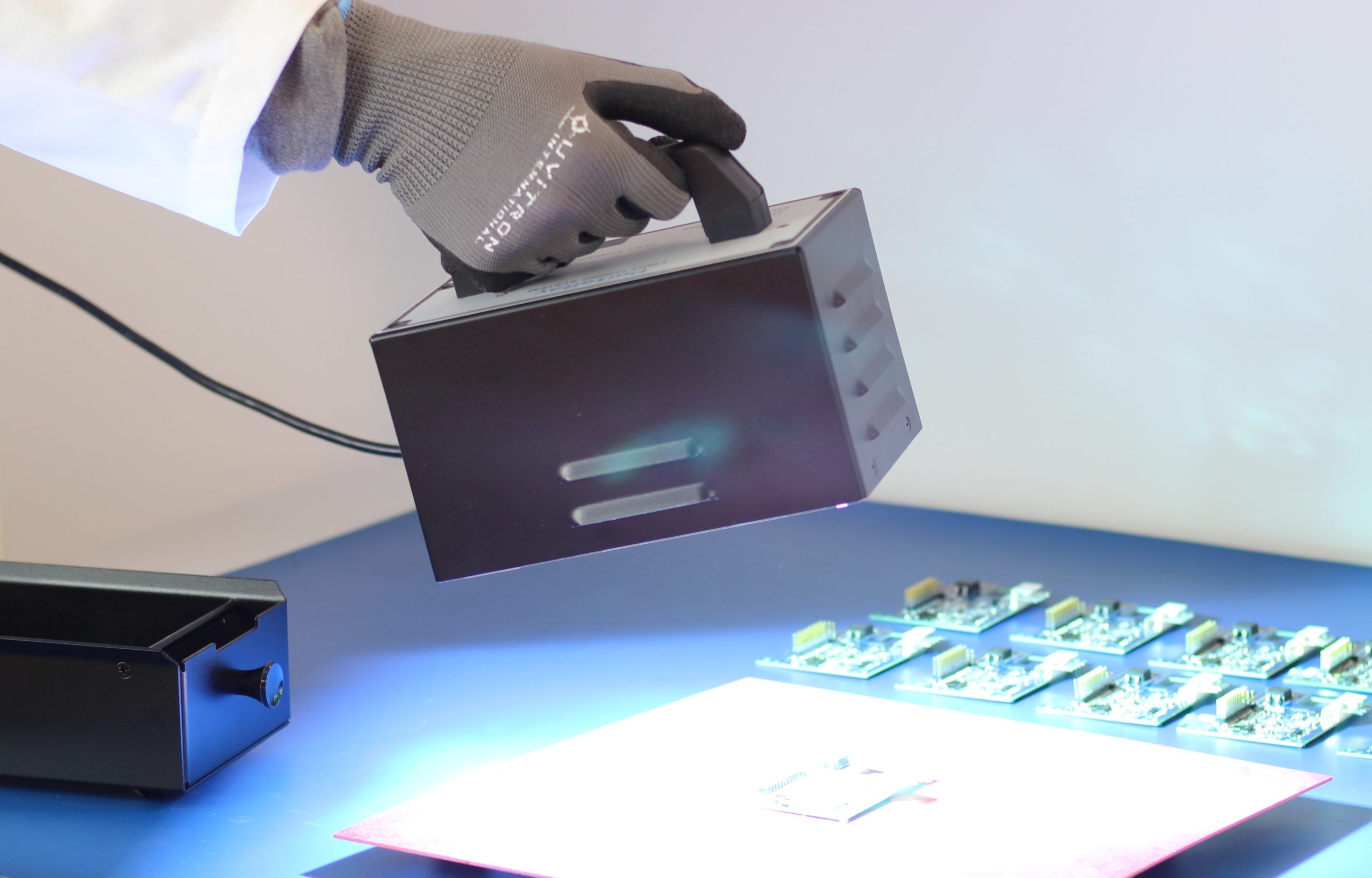
UV curing uses light, not heat, to cure materials. The curing reaction happens when ultraviolet energy activates the material’s chemistry, not because the part gets hot.
Is UV curing safe?
UV curing is safe when used correctly with proper equipment and shielding. Industrial UV systems are designed to contain UV light and protect operators during normal operation.
What’s the difference between UV arc and UV LED curing?
UV arc systems use traditional lamps that produce a broad range of UV wavelengths and higher overall heat. They are well suited for many established materials and applications that require broad-spectrum UV output. UV LED systems use light-emitting diodes to produce UV light at specific wavelengths with much lower heat. They are more energy efficient, turn on instantly, and are often used when temperature control, precision, or longer lamp life is important.
How do I know if UV curing is right for my application?
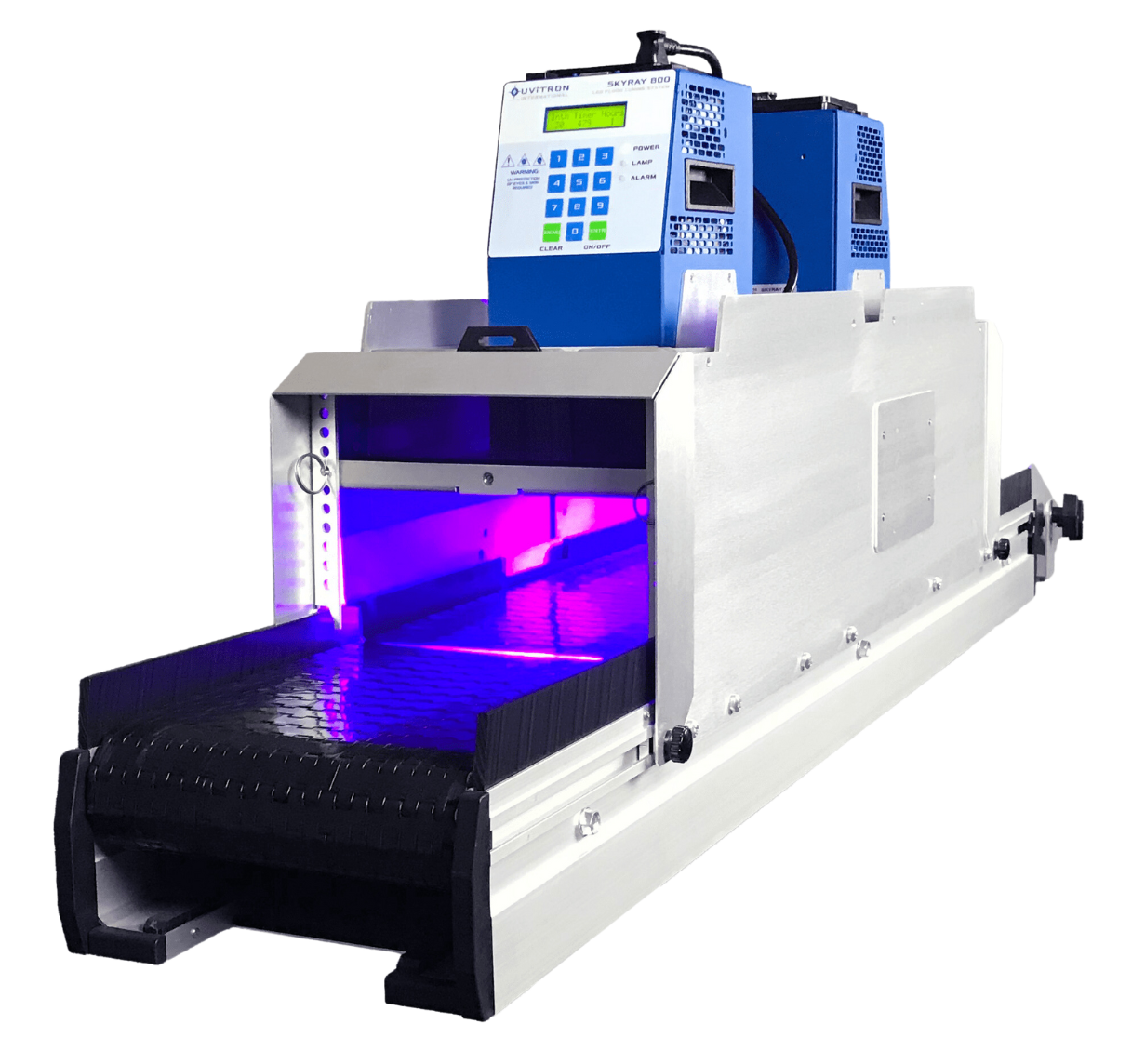
UV curing is a good fit if you need fast cure times, consistent results, and minimal drying or wait time in your process. It’s commonly used when production speed, precision, or temperature sensitivity matters. The best way to know for sure is to look at the material being cured, part geometry, and production requirements. System type, wavelength, intensity, and exposure time all play a role in getting reliable results.
Does UV curing work instantly?
UV curing happens very quickly, often in seconds, but it isn’t automatic by default. The material needs the right amount of UV energy at the correct wavelength to fully cure. If the exposure is too short or the energy is too low, the material may feel dry on the surface but not be fully cured. That’s why proper system setup and testing are important for consistent results.
What factors affect UV cure quality?
UV cure quality depends on the right combination of wavelength, light intensity, and exposure time. If any of these are off, the material may not fully cure. Material formulation, part geometry, distance from the light source, and system setup also play a role. Consistent results come from matching the UV system to the application and verifying the cure during setup.